To clean a Persian rug safely, vacuum gently without a beater bar, address spills immediately by blotting with cool water, and keep the rug dry and out of direct sun. Fine hand-knotted Persian rugs should be full-immersion washed by a professional, steam cleaning or scrubbing at home risks color bleed and foundation damage.
Certifications and service details current for 2026.
A Persian rug is a hand-knotted textile, not a piece of carpet. The wool pile is tied knot by knot onto a cotton foundation, and the dyes in it behave very differently once the rug gets wet. This guide covers what is safe to do at home, the habits that quietly wear these rugs out, and the point where the job belongs in a wash plant.
How do you clean a Persian rug at home?
Vacuum with suction only, and shake or beat smaller Persian rugs outdoors to release grit. Blot spills immediately with a white cloth and cool water. Use a quality rug pad to reduce wear and keep the rug from slipping on hard floors.
- Vacuum with suction, never a beater bar. A rotating brush pulls at knots, fuzzes the wool, and shreds the fringe. Lift the beater bar or use a suction-only attachment, and do the back of the rug two or three times a year to shake grit down out of the foundation.
- Follow the nap. Run your hand across the pile. One direction feels smooth, the other rough. Vacuum with the smooth direction so you are laying the pile down rather than lifting knots against their lay.
- Blot spills the moment they happen. Press a clean white cotton cloth straight down into the spill and work from the outside edge inward. Never rub, and never use a colored towel, which can transfer its own dye into damp wool.
- Use cool water only. Heat sets protein stains and can felt wool permanently. Dampen, blot, repeat until little transfers onto the cloth, then stop.
- Dry it flat with airflow. Put a fan on the damp area and keep it off the floor if you can. A rug left damp overnight can mildew, and prolonged moisture rots a cotton foundation from the inside.
- Rotate the rug twice a year. Turning it 180 degrees evens out both foot traffic and light exposure so one end does not age faster than the other.
Why is a Persian rug different from wall-to-wall carpet?
Carpet is a manufactured synthetic surface glued or stretched to a floor, and it is built to tolerate hot water and detergent. A Persian rug is wool pile knotted onto a cotton warp and weft, finished by hand, and often decades or generations old. Nothing about it is fixed in place: the foundation swells when wet, the dyes can move, and the fringe is structural rather than decorative.
How should you vacuum a hand-knotted rug?
Slow, light passes with suction only. The goal is to lift the loose grit sitting at the base of the pile, because that grit acts like sandpaper every time someone walks across the rug and cuts wool fibers off at the knot. Weekly vacuuming in a living room does more for a Persian rug’s lifespan than almost anything else you can do.
Keep the head off the fringe entirely. The fringe on a hand-knotted rug is not sewn on: it is the exposed end of the cotton warp threads the whole rug is tied to, which is why fringe damage is structural damage. Comb it straight by hand instead, and if it is already fraying or pulling away, have it addressed as rug repair before the end knots start unravelling.
Why is dye migration the real risk?
Many Persian rugs carry natural dyes, and older synthetic dyes are not always colorfast either. Add enough water and a red ground can wick into an ivory border in minutes and stay there. Professionals test every color for bleed before a drop of wash water touches the rug, then control temperature, pH, and dwell time so the dyes stay where the weaver put them.
That test is the step no home method has. A rented machine, a garden hose, or a bathtub soak all commit you to the outcome before anyone knows how the rug will behave.
Can you steam clean or shampoo a Persian rug?
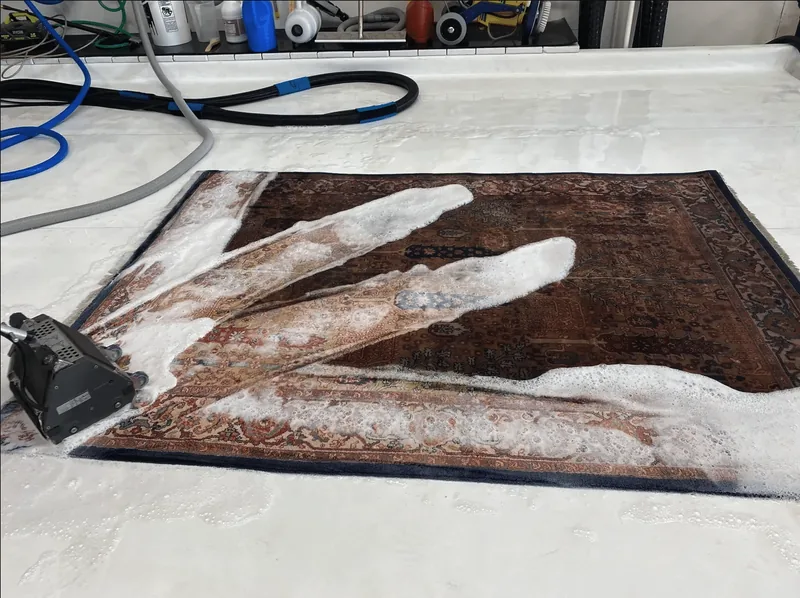
Steam extraction and rented shampoo machines are built for synthetic carpet and are a poor match for hand-knotted wool. They push hot water and alkaline detergent into a rug that cannot then be rinsed or dried properly, which strips the lanolin that gives wool its resilience, stiffens the foundation, and leaves a musty smell. Most of the dye-bleed damage we see arrives after a well-meant machine cleaning.
Washed by hand in Boise
Every rug is dye-tested, dusted, and full-immersion hand washed, never cleaned on your floor.
“I brought in several older rugs that had not been cleaned in years and they now look very clean and much more vivid in color.”
Verified Google review · 5.0★ from 303 reviews
| Do | Don’t |
|---|---|
| Vacuum with suction only, following the nap | Run a beater bar or vacuum the fringe |
| Blot spills with cool water and a white cloth | Rub, scrub, or use hot water |
| Use a proper pad and rotate twice a year | Leave the rug damp or dry it in the sun |
| Ask before using any product on the pile | Use bleach, vinegar, dish soap, or oxygen boosters |
| Send pet accidents for a decontamination wash | Steam clean or shampoo a hand-knotted rug |
Why do Persian rugs need professional washing?
Persian rugs are hand-knotted with dyes that can be sensitive to water and heat. Only a controlled, dye-tested full-immersion wash can deep-clean them without risking bleed or shrinkage. Done right, cleaning actually restores the colors dulled by years of embedded grit.
What happens in a professional Persian rug wash?
The rug is inspected and dye-tested, then dusted, which is the step that separates rug washing from carpet cleaning: dry soil has to come out mechanically before any water goes on, or it turns to mud in the pile. From there it is hand washed by full immersion, thoroughly rinsed, dried under controlled conditions, and groomed. You can see the whole sequence in our rug washing process.
How often should a Persian rug be washed?
Every 12 to 24 months for a rug in a living area, and sooner with pets or heavy foot traffic. Vacuuming handles the surface, but it cannot reach the abrasive grit packed at the base of the knots, and that grit is what actually shortens a rug’s life. A rug in a guest room or under a bed can go considerably longer between washes.
How do you protect the rug day to day?
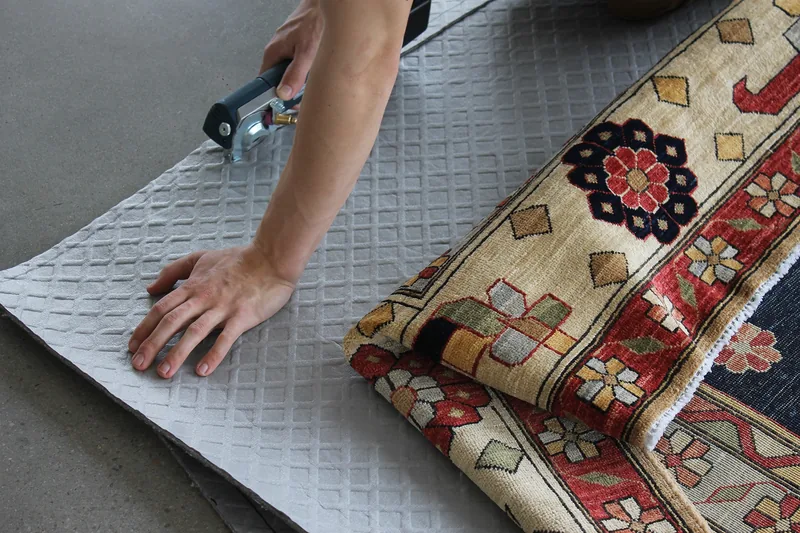
A correctly sized pad does three jobs at once: it stops the rug creeping, cushions the pile so grit is not ground straight through it, and lets a little air move underneath. Beyond the pad, rotate the rug, move heavy furniture a few inches when you can so the legs do not crush the same knots for years, and keep a strong sun line off the same stripe of pile all summer.
If you are choosing one, our rug pad selection guide covers what suits hardwood, tile, and carpet.
How do you keep moths out of a wool rug?
Clothes moth larvae eat the protein in wool, and they favour dark, still places: under a sofa, beneath a bed, along the underside of a rug that never moves. The defence is disturbance and cleanliness. Vacuum under the furniture, lift and turn the rug, and look for fine sand-like debris or bare patches where the pile has been grazed down to the foundation. Our guide to moth damage in wool rugs shows what early damage looks like.
Will the colors fade, and why do they vary?
Direct sun will fade any dye eventually, natural ones fastest, so rotate the rug and consider a UV film or a sheer on a window that puts a hard line of light across the pile. Uneven bands of color that run the width of the rug are usually abrash: natural variation between dye lots the weaver used, and a mark of a hand-made rug rather than a flaw to be corrected.
When should you stop and call a specialist?
Stop if the spill is pet urine, red wine, ink, or anything dyed, if a stain has already dried in, if you can smell the rug, or if a color has started to move while you were blotting. Antique and silk pieces deserve a look before any home treatment at all, see antique rug cleaning. The written inspection quote is free, so nothing is lost by asking first.
Keep reading
- All rug care guides
- How to clean an Oriental rug
- How to tell if your rug is wool, silk, or synthetic
- In-home vs facility rug cleaning
Ready for a wash?
Persian rug cleaning questions
Can I clean a Persian rug myself?
You can safely vacuum it and blot fresh spills with water and a white cloth. What you should not do at home is saturate it, scrub it, or use a rented machine, because Persian rugs are hand-knotted with dyes that can migrate once the foundation gets wet.
What should I never use on a Persian rug?
Avoid bleach, oxygen boosters, vinegar, dish soap, carpet-machine detergents, and any powder that has to be beaten in. These strip lanolin from wool, dull the pile, and can set dyes moving. Steam extraction on a hand-knotted rug is also a common cause of damage.
How often should a Persian rug be professionally cleaned?
Every 12 to 24 months for a rug in a living area, sooner if you have pets or heavy foot traffic. Vacuuming between cleanings does most of the work; professional washing removes the deep grit that grinds against and cuts the wool fibers.
Persian rug that needs more than a blot?
Free pickup & delivery across the Treasure Valley, and an exact written price before any cleaning begins.
Sources & industry standards
- IICRC, the Institute of Inspection, Cleaning and Restoration Certification: the industry body whose S100/S310 standards govern professional rug and carpet cleaning.
- The WoolSafe Organisation: independent certification for wool-safe cleaning products and methods.
- The Carpet and Rug Institute (CRI): the science-based trade authority for carpet and rug care.
- U.S. EPA, Carpets & Indoor Air Quality: guidance on how clean carpets and rugs support healthy indoor air.