Yes, Fiber Specialties does both. We treat the infestation and we repair the damage. A full-immersion wash at our Boise facility eliminates the moths, larvae, and eggs, and the eaten pile is then rebuilt by hand. Free pickup across the Treasure Valley. Call (208) 272-9705.
Certifications and service details current for 2026.
“Devin took the time to teach me about the rugs I own and about the options for cleaning, stabilization and repair.”
Verified Google review · 5.0★ from 303 reviews
An heirloom rug that looks ruined usually is not
Moth damage looks final. A bare patch under the sofa, a thin grey shadow where a border used to be, and the rug reads as a write-off. It very rarely is. The larvae eat the wool pile, but they leave the cotton foundation underneath alone, and a rug with an intact foundation is a rug that can be rebuilt.
That is the whole job in two halves: clear the infestation so nothing is still eating, then put back what has been eaten. We do both in our own Boise facility, on a written estimate you approve before any work starts.
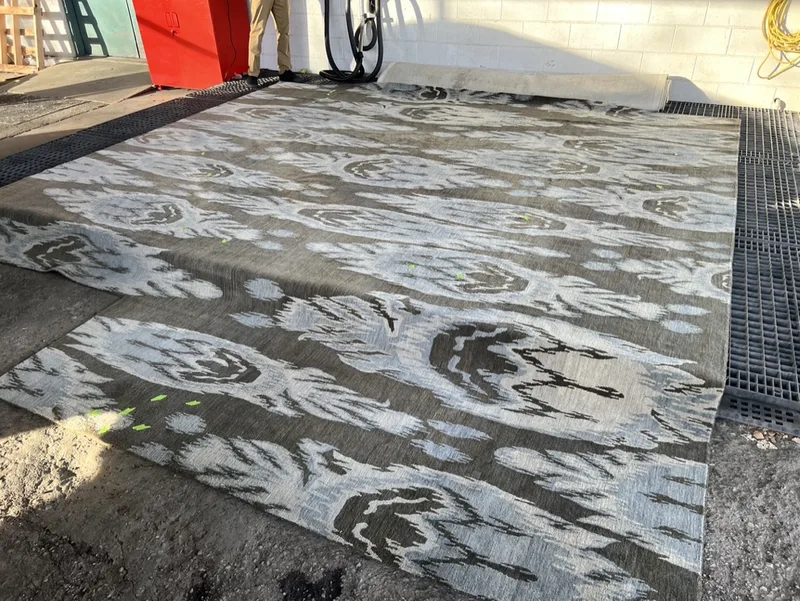
What does moth damage in a rug look like?
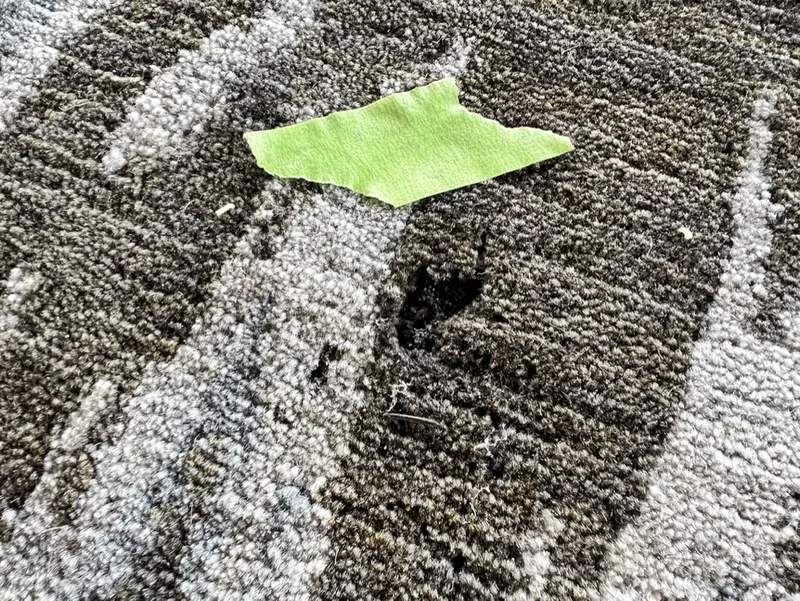
Moth damage announces itself in the parts of a rug you disturb least, because the larvae will not work anywhere bright or busy. Check under the sofa, beneath the bed, along the edges, and on the back before you decide a rug is clean. You are looking for four things:
Loose pile or bare patches
Wool that comes away in your fingers, or an area grazed down to the flat of the rug. It often starts as a soft, thin-feeling patch rather than an obvious hole.
Fine webbing or cocoons
Silky threads across the pile, or small tube-like cases stuck down in it. This is the clearest sign that what you have is moths rather than ordinary wear.
White and black specks
Cream-colored eggs and sand-like dark grains, which are larvae waste. Tip a corner up over a hard floor and see what falls out of the back.
Foundation still intact
The giveaway. Moths strip the wool pile but leave the cotton warp and weft, so the damaged area goes thin and pale rather than opening into a ragged hole.
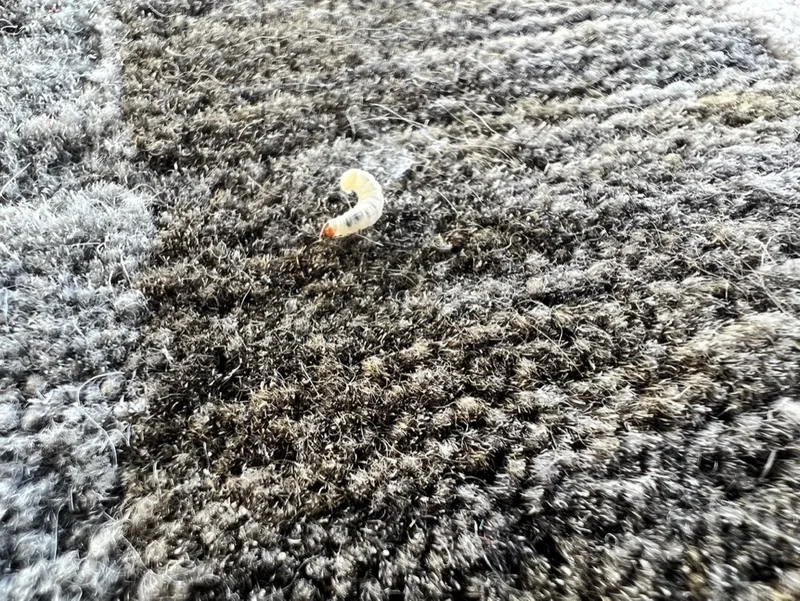
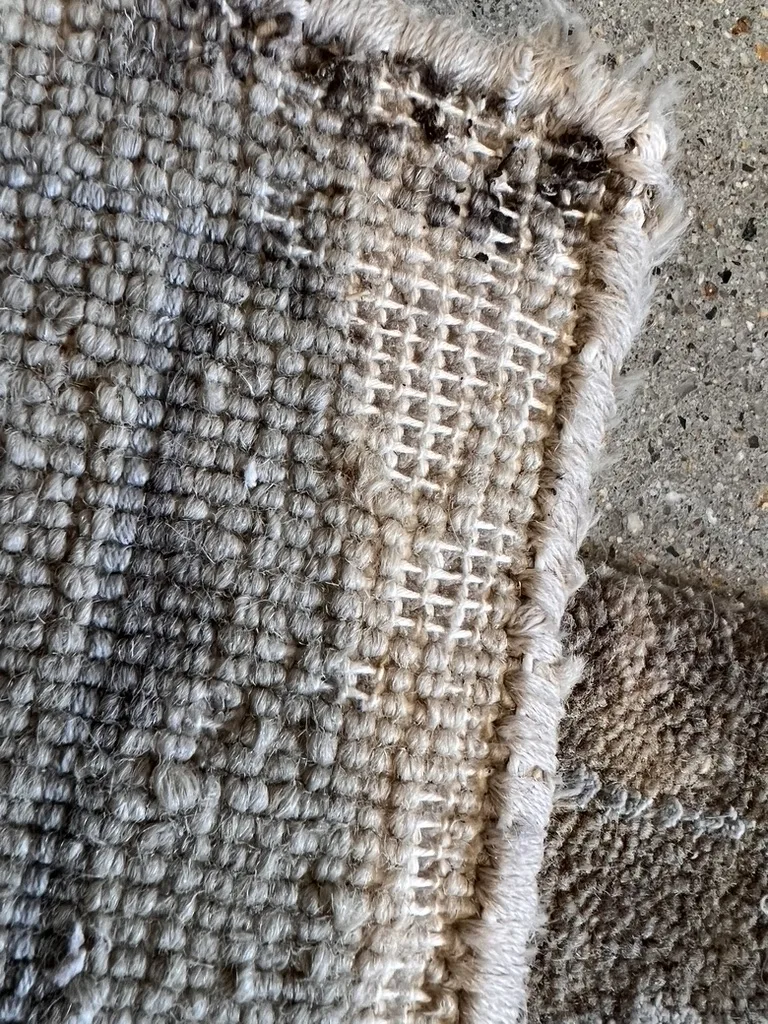
The insect you actually have to deal with is the larva, not the moth flying around the lamp. Adult clothes moths do not eat wool at all; they only lay eggs. The larvae are the ones feeding, and they can keep feeding for up to around three years, which is why an untouched rug in a spare room can be quietly destroyed between one visit and the next. If you want the detail on how moths get into a rug and how to keep them out, our guide to moth damage in wool rugs covers prevention and diagnosis in detail. This page is about getting an already damaged rug fixed.
Treated and repaired in one place
The wash is what kills the infestation. The reweave is what gives you the rug back.
How we treat and repair moth damage
Treatment comes first, always. Reweaving a rug that still has larvae in it just hands them fresh wool, so the wash is never optional and never skipped. This is the standard professional sequence for a full-immersion facility, and it is what happens to your rug at our Boise plant.
1. Inspect
A Certified Master Rug Cleaner goes over the pile, the edges, and the back to map every affected area, confirm the damage is moths rather than wear or pet chewing, and separate what needs treating from what needs rebuilding.
2. Dust
The rug is dusted before any water touches it. Dusting drives out the dry debris, eggs, and larvae sitting down against the foundation, which surface vacuuming at home never reaches.
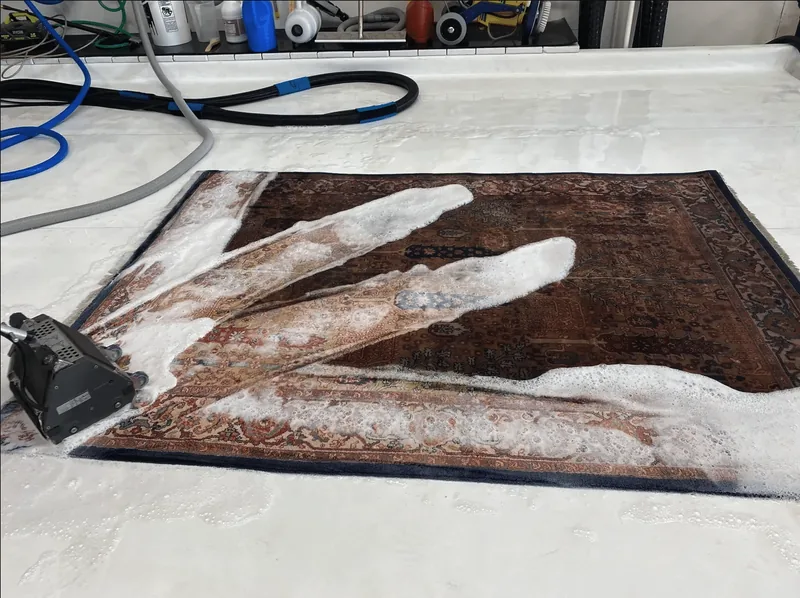
3. Full-immersion wash
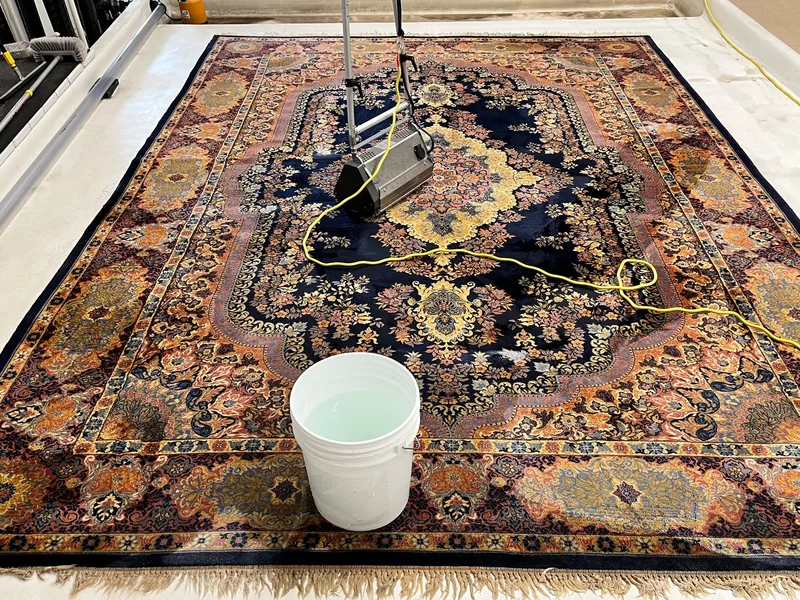
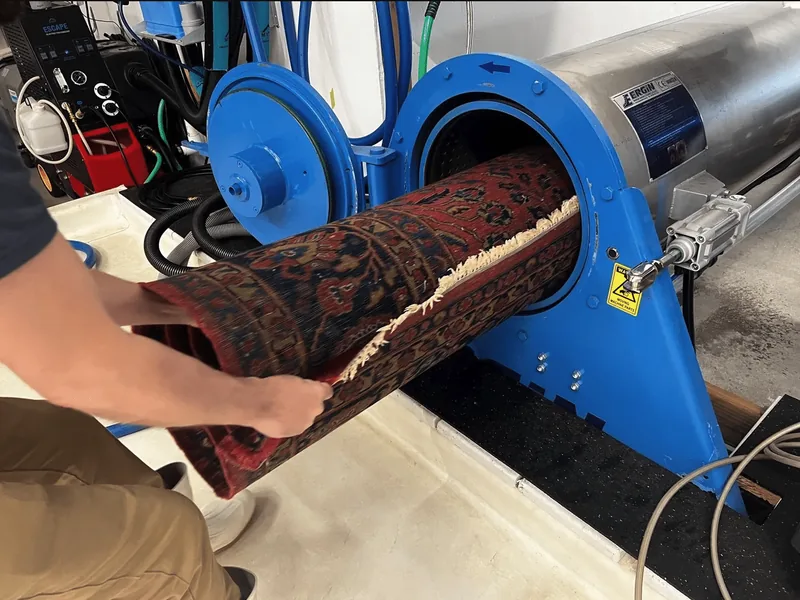
The rug is submerged and hand-washed. Immersion is the treatment: it eliminates the moths, larvae, and eggs out of the depth of the pile, and it strips out the soil and residue that drew them to the rug in the first place.
4. Controlled dry
Water is extracted and the rug is dried under controlled conditions at the facility, never in the sun or over a rail outside, so the foundation dries all the way through and the dyes stay where they belong.
5. Reweave or secure
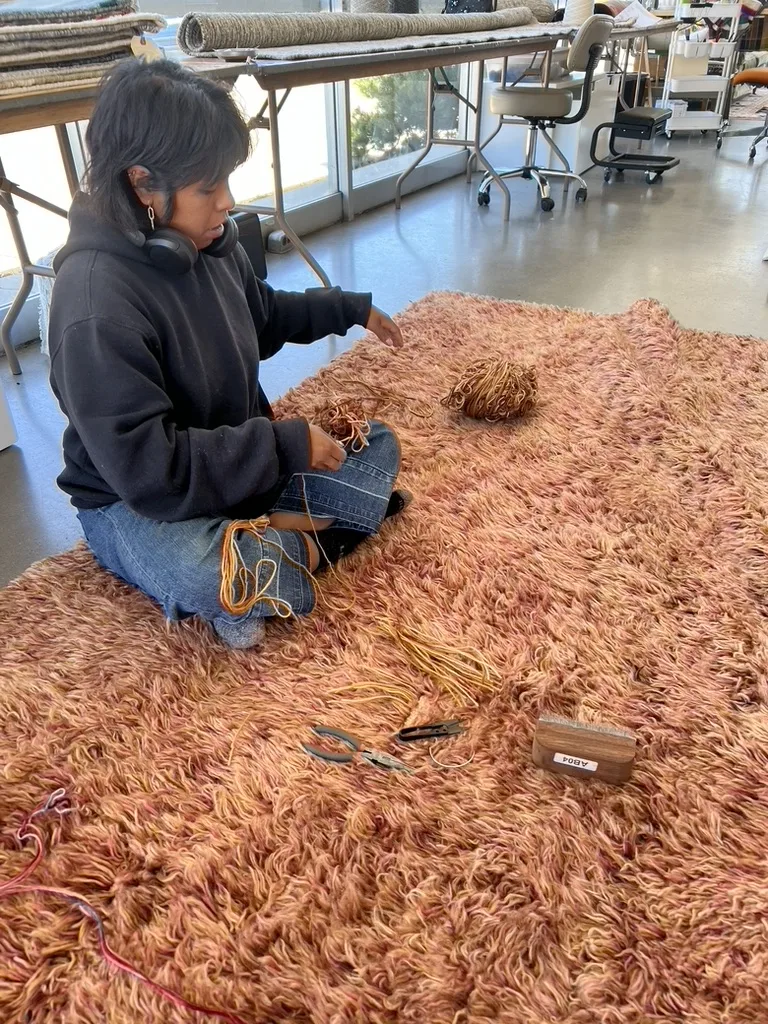
Bare and thinned areas are rebuilt by hand, reweaving and reknotting to match the color, wool, and pattern. Where a full reweave is not worth it, the area is secured instead so it cannot spread.
A moth-proofing finish can also be applied after the wash. Ask about it at inspection and we will tell you honestly whether your rug, and the room it lives in, actually warrant it.
Dusting comes first
Dusting drives out the dry debris, eggs, and larvae that vacuuming never reaches.
Why the wash is the treatment
Moth larvae live down against the foundation, not on the surface, and they feed on wool that carries soil, sweat, food residue, and pet dander. Vacuuming lifts what is loose on top and leaves everything that matters. Freezing and putting a rug out in the sun are the DIY answers people reach for, and they have their place on a small item, but neither is what a full-immersion plant does to a rug.
Submerging the rug deals with both halves of the problem at once. It clears the moths, larvae, and eggs out of the pile and foundation, and it removes the food source, so the rug stops being somewhere worth laying eggs. That is why the wash is the primary treatment and everything else is support. The full sequence is on our rug washing process page, and the same bath is what we use for wool rug cleaning generally.
Treat, repair, or secure? How we decide
Every moth-damaged rug gets treated. What differs is what happens to the damage afterwards, and that is a judgement about the rug’s value, where the damage sits, and what you want to do with the piece. We put the recommendation in writing so you can weigh it yourself.
| Approach | What it involves | When it is the right call |
|---|---|---|
| Treatment only | Dust, full-immersion wash, controlled dry | The infestation is caught early and the pile loss is light enough to live with |
| Treat and reweave | The wash, then holes and bare patches rebuilt knot by knot to match color, wool, and pattern | Hand-knotted, antique, or heirloom rugs, and any damage sitting where you can see it |
| Treat and secure | The wash, then the damaged area stabilized so it cannot spread | The damage sits under furniture, or a full reweave would cost more than the rug is worth |
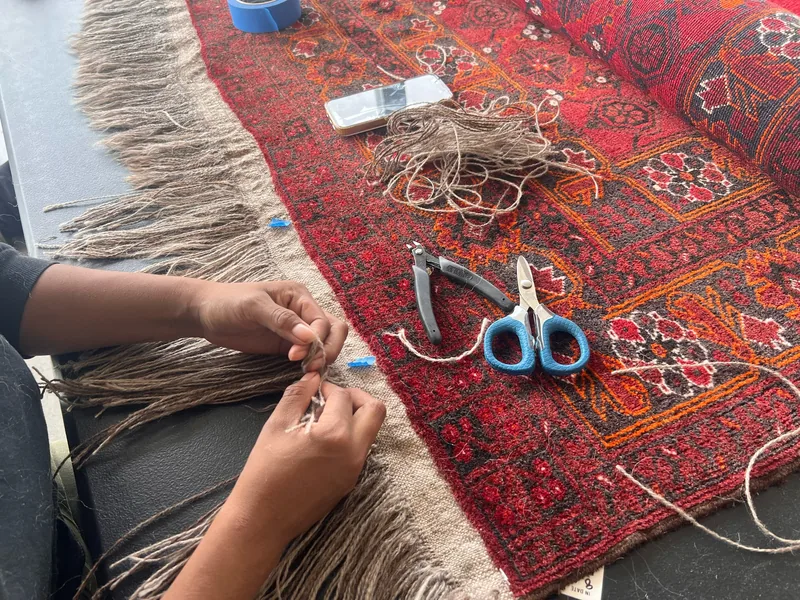
| Treat and repair the edges | The wash, plus fringe, selvage, or side cord rebuilt where larvae have eaten the ends | Damage concentrated at the ends and edges rather than in the field |
Securing is not a lesser answer, it is a different one. On a rug that lives under a bed, stopping the damage spreading is often the sensible spend, and we would rather tell you that than sell you a reweave you do not need. Where the piece justifies it, full rug restoration can take a badly eaten rug back to displayable condition, and edge work is covered on our binding, serging and fringe repair page.
Hand reweaving, matched to the rug
Rebuilding an eaten area is slow hand work. The foundation is bridged first, then the pile is reknotted row by row in wool matched to the surrounding field, so the repaired patch sits level with the rest of the rug and reads as rug rather than as a patch. On a hand-knotted piece, pattern continuity matters as much as color, and getting that right is what separates a repair you cannot find from one you can.
We do the full range of standard repairs in our own Boise shop, and for the most involved weaving we work with some of the best repair weavers in the world. Which route your rug takes is part of the written estimate, not a surprise later.
Why moth damage is worth acting on now
Moth damage is one of the few rug problems that gets actively worse the longer you leave it. The larvae keep feeding for as long as they are in the wool, so the bare patch you found this month is bigger next month, and a repair that would have been a hand’s width becomes a section. The cost follows the area of lost pile almost exactly, which means early is cheap and late is not.
There is a second reason not to wait. Moths spread to whatever else is nearby, so a rug left untreated puts the wool rug in the next room, and anything wool in a closet, at risk too. Getting the rug out of the house and into a wash is the step that stops the clock.
What does moth damage repair cost?
We price moth work by the job, not by the square foot, because the wash is predictable and the repair is not. Two rugs the same size can need very different amounts of reweaving. So every rug is inspected at our facility first, and you get one written price covering the treatment and the repair before anyone starts. You are free to decline it and have the rug delivered back, at no charge.
Pickup, delivery, and the inspection itself are free across the Treasure Valley, so finding out what your rug needs costs you nothing but the phone call.
Free pickup across Boise and the Treasure Valley
We collect moth-damaged rugs free of charge from Boise, Meridian, Eagle, Nampa, Caldwell, Kuna, and Garden City, and everywhere in between across Ada and Canyon counties. Roll the rug up and leave it where it is, and we handle the wrapping, the lifting, and the transport to our facility on West Overland Road. If the rug is actively infested, bagging or wrapping it before we arrive is worth doing, because it keeps the larvae from moving to anything else before we collect it.
Full details are on our free rug cleaning pickup and delivery page, or go straight to your city: Boise, Meridian, Eagle, Nampa, Caldwell, Kuna, and Garden City. Outside the valley, we take rugs shipped to us from anywhere in the country.
Related repair services
- Rug repair (overview)
- Rug restoration & reweaving
- Binding, serging & fringe repair
- Antique & silk rug cleaning
Before you book
Moth damage repair questions
Can a moth-eaten rug be repaired?
Usually, yes. Once the rug has been washed to clear the infestation, bare and thinned areas are rebuilt by hand, reweaving and reknotting to match the color, wool, and pattern. Small spots disappear completely. Larger areas take more work, and we tell you honestly what the result will look like before we start.
Do you kill the moths or just fix the holes?
Both, and in that order. The full-immersion wash is what clears the moths, larvae, and eggs out of the pile and foundation. Repairing the holes without washing the rug first just gives the larvae new wool to eat, so we never do the reweaving on its own.
How much does moth damage repair cost?
It depends on how much wool has been lost, so we quote by the job rather than by the square foot. Every rug is inspected at our Boise facility and you get an exact written price covering the wash and the repair before any work begins. Pickup, delivery, and the inspection are free.
Is it worth repairing a moth-damaged rug?
For a hand-knotted or heirloom rug, almost always, because repair costs a fraction of replacement. When the damage is worse than the rug is worth, we say so, and we can instead secure the damaged area to stop it spreading. That is a smaller job and a common choice for rugs that sit under furniture.
How do I stop moths from coming back?
Clean the room as well as the rug. Vacuum the floor and under the furniture where the rug sat, bag and bin the vacuum contents, and clean or replace the rug pad, because larvae hide there too. After that, keep wool rugs vacuumed, rotated, and lifted occasionally, since moths only settle in still, soiled, undisturbed areas.
Found moth damage in a rug?
Free pickup and a written price across the Treasure Valley, covering the treatment and the repair. The sooner it is washed, the less of the rug is lost.
Sources & industry standards
- IICRC, the Institute of Inspection, Cleaning and Restoration Certification: the industry body whose S100/S310 standards govern professional rug and carpet cleaning.
- The WoolSafe Organisation: independent certification for wool-safe cleaning products and methods.
- The Carpet and Rug Institute (CRI): the science-based trade authority for carpet and rug care.
- U.S. EPA, Carpets & Indoor Air Quality: guidance on how clean carpets and rugs support healthy indoor air.