Moth damage in a wool rug shows up as bare or thinning patches, usually in still, undisturbed areas like under furniture or along the edges, often with fine webbing or sand-like debris. The larvae, not the adult moths, eat the wool. The fix is a full-immersion wash to remove the larvae, eggs, and the soil that draws them, plus repair of the damaged pile. Call (208) 272-9705.
Moths quietly do more damage to wool rugs than almost anything else, because the damage happens out of sight. This guide covers how to spot moth damage, stop it, and prevent it.
What does moth damage in a rug look like?
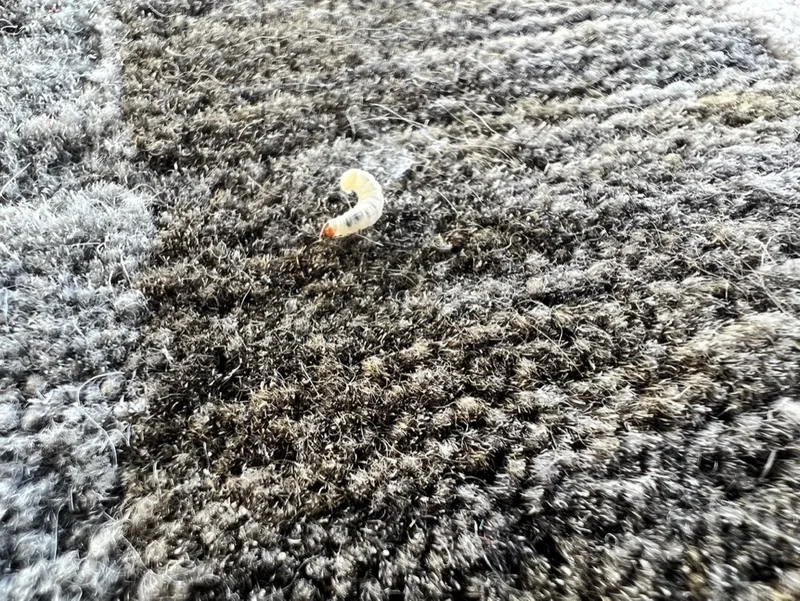
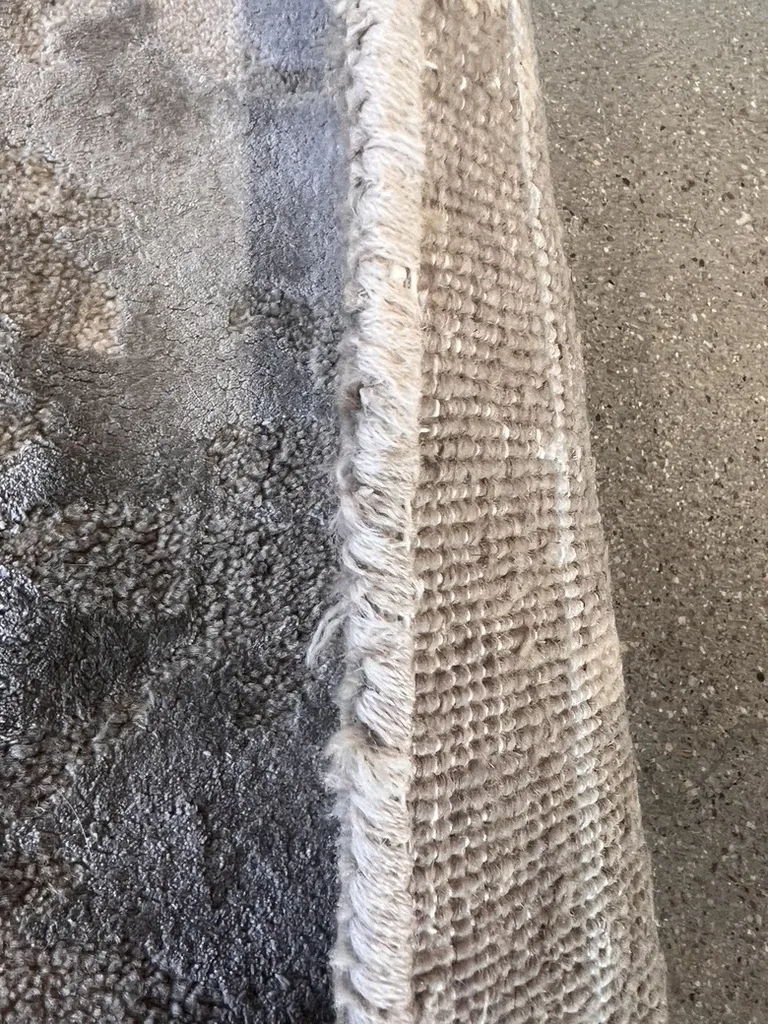
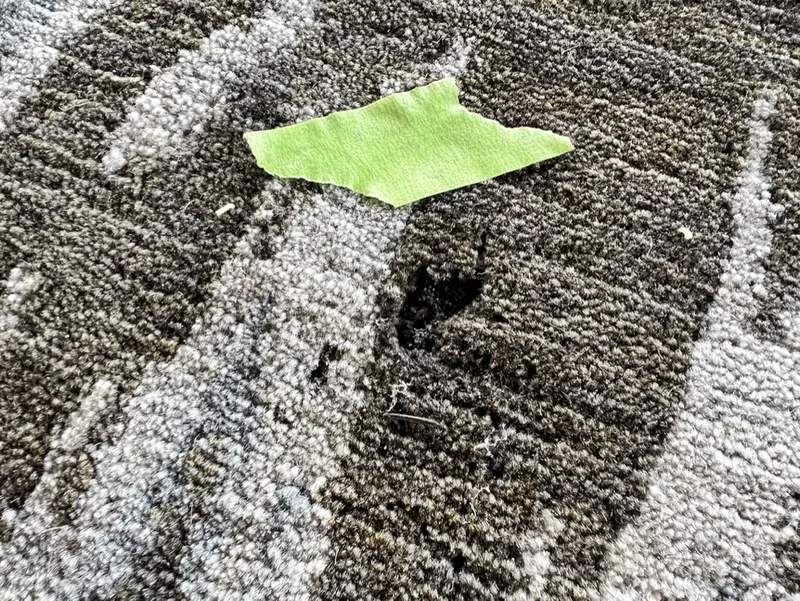
Moth damage is easy to miss until it is widespread. Look for bare or thinning patches where the pile has been eaten down to the foundation, most often in low-traffic spots: under a sofa, beneath a bed, along the edges, or on the back of a rug. You may also see fine silky webbing, tiny sand-like grains that are larvae droppings, or small cream-colored larvae themselves in the pile. Because moths avoid light and movement, the worst damage is usually in the parts of the rug you disturb the least.
What actually causes moths in a wool rug?
Wool is a protein fiber, and the larvae of clothes moths feed on that protein, which is what lets them eat holes in a rug. The adult moths do not eat wool at all; they only lay eggs. The larvae favor conditions that let them work undisturbed: dark, still areas, and rugs that carry soil, food residue, sweat, or pet dander, all of which make wool more appealing to them. This is why a stored or under-furniture rug is at the most risk, and why a clean, regularly used rug is far safer.
How do you get rid of moths in a wool rug?
Cleaning is the first and most important step. A professional full-immersion wash removes the larvae and eggs from the pile and foundation and strips out the soil that attracted the moths in the first place. Then treat the area around the rug: vacuum the floor thoroughly, including under and behind furniture, and clean or replace the rug pad, since larvae hide there too. If the pile is already eaten away, the rug also needs repair. Home moth sprays and cedar help around the edges, but they do not clean a rug that already has larvae in it.
Does cleaning a rug get rid of moths?
A professional wash is the reliable way to clear moths from a rug. Full immersion removes the larvae and eggs and, just as important, removes the soil and residue that are the food source, so the rug is no longer attractive to them. Surface vacuuming alone cannot do this, because it misses the larvae working deep in the pile and against the foundation. Cleaning the rug and cleaning the space where it sits, together, is what breaks the cycle.
How do you prevent moth damage in a wool rug?
Prevention comes down to keeping wool rugs clean and used. Follow these habits and moths rarely get a foothold.
| Do | Why it helps |
|---|---|
| Vacuum regularly, both sides | Removes larvae, eggs, and their food |
| Rotate the rug and lift it to clean under it | Disturbs the still areas moths favor |
| Have wool rugs professionally cleaned | Strips the soil that attracts moths |
| Clean before long-term storage | A soiled stored rug is a moth buffet |
| Roll, do not fold; wrap in cotton, not plastic | Breathes; avoids trapped moisture |
Store wool rugs off the floor in a cool, dry place, and unroll them once or twice a year to check on them. A professional wash before storage is cheap insurance against coming back to a damaged rug.
Can a moth-damaged wool rug be repaired?
Often, yes, and it is usually far cheaper than replacing a hand-knotted rug. After the rug is cleaned to stop the infestation, bare or thinned areas can be rewoven and reknotted to match the color and pattern, and eaten edges or fringe can be rebuilt. Small spots blend in completely; larger areas take more work but can be restored. We inspect the rug and give an honest estimate first. See rug moth damage repair for how we treat the infestation and rebuild the pile, our rug repair and rug restoration services, and wool rug cleaning for the wash that stops the damage.
Are moths or carpet beetles doing the damage?
Two pests eat wool rugs, and they leave slightly different signs. Clothes moth larvae spin fine silky webbing or tube-like cases in the pile and leave sand-like droppings, and you may see small cream larvae. Carpet beetle larvae are tiny, bristly, and carrot-shaped, and they tend to leave shed skins behind rather than webbing. Both feed on the protein in wool, and both favor dark, still, soiled areas. The treatment is the same either way: clean the rug to remove the larvae and their food, clean the space around it, and repair the damage. If you are seeing live insects, treating the whole room, not just the rug, keeps them from coming back.
What should you do the moment you find moth damage?
Act quickly, because the larvae keep eating as long as they are in the rug. Take the rug outside if you can, and gently vacuum both sides to remove loose larvae and debris, then bag and discard the vacuum contents. Vacuum the floor and baseboards where the rug sat, and check other wool items nearby. Then get the rug to a professional for a full-immersion wash, which is the step that actually clears the infestation from deep in the pile and foundation. The sooner the rug is cleaned, the less of it is lost.
The bottom line: moths damage wool rugs quietly, in the spots you disturb least, and the larvae are what do the eating. Keep wool rugs clean, used, and properly stored, lift them to check the still corners now and then, and treat any sign of damage quickly with a professional wash and repair. Caught early, moth damage is almost always fixable and far cheaper than losing the rug.
Moth damage questions
What does moth damage in a rug look like?
Moth damage shows up as bare or thinning patches in a wool rug, often in low-traffic areas, under furniture, or along the edges where the rug sits undisturbed. You may also see fine webbing, sand-like debris, or small larvae in the pile. The larvae, not the adult moths, are what eat the wool.
How do you get rid of moths in a wool rug?
Start by cleaning the rug, since a full-immersion wash removes the larvae, eggs, and the soil that attracts them. Vacuum the area around where the rug sat, including under furniture, and clean or replace the pad. For an active infestation or damaged pile, a professional wash plus repair is the reliable fix.
Does cleaning a rug kill moths?
A professional full-immersion wash removes moth larvae and eggs and strips out the food source, the soil and residue that draw moths in. That is why cleaning is the first step against moths. Surface vacuuming alone misses the larvae deep in the pile and the foundation.
How do you prevent moth damage in a wool rug?
Keep wool rugs clean and used: vacuum regularly, rotate the rug, and lift it to clean underneath, since moths favor still, soiled areas. Have wool rugs professionally cleaned before long-term storage, roll rather than fold them, and wrap them in breathable cotton, not plastic. Clean wool is far less appealing to moths.
Can a moth-damaged wool rug be repaired?
Often, yes. After cleaning, bare or thinned areas can be rewoven and reknotted to match the color and pattern, and worn edges or fringe can be rebuilt. We assess the rug and give an honest estimate; even significant moth damage is usually cheaper to repair than to replace a hand-knotted rug.
Sources
Standards referenced in this guide: WoolSafe · IICRC (S100 professional cleaning standard) · Association of Rug Care Specialists (ARCS).
Written by the Certified Master Rug Cleaners at Fiber Specialties, Boise, Idaho. Last updated July 2026.
Moths in a wool rug?
Free pickup & delivery across the Treasure Valley. Certified Master Rug Cleaners.
Sources & industry standards
- IICRC, the Institute of Inspection, Cleaning and Restoration Certification: the industry body whose S100/S310 standards govern professional rug and carpet cleaning.
- The WoolSafe Organisation: independent certification for wool-safe cleaning products and methods.
- The Carpet and Rug Institute (CRI): the science-based trade authority for carpet and rug care.
- U.S. EPA, Carpets & Indoor Air Quality: guidance on how clean carpets and rugs support healthy indoor air.