For most rugs, yes, you need a rug pad. A pad grips so the rug does not slide, cushions so foot traffic wears the pad instead of the rug, and protects the floor underneath from scratches and color transfer. It is the cheapest thing you can do to make a rug last longer, especially on hard floors. Fiber Specialties makes custom-cut pads matched to your rug and floor. Call (208) 272-9705.
A rug pad is the part of your rug you never see and rarely think about, and it does more to protect the rug and your floor than almost anything else. Here is what a pad does and how to choose one.
Do you really need a rug pad?
In almost every case, a pad is worth it. Without one, a rug on a hard floor slides when you step on it, which is both a trip hazard and a source of wear as the backing grinds against the floor. On any floor, foot traffic presses the rug down against a hard surface, and the fibers take the full force with nothing to cushion them. A pad solves both problems at once. The only rugs that may not need a pad are very large, heavy pieces that do not move and sit on top of wall-to-wall carpet, and even then a pad helps.
What does a rug pad do?
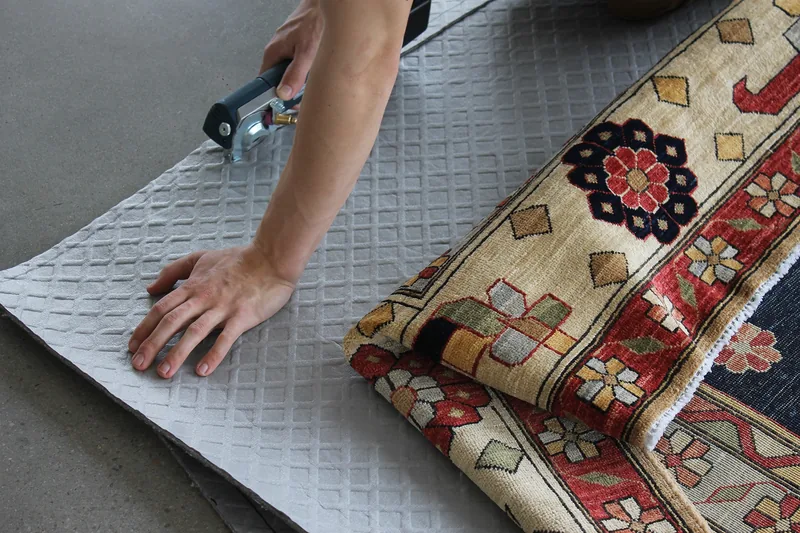
A quality rug pad does four jobs. It grips, so the rug stays put on hard floors and does not ruck up. It cushions, so foot traffic compresses the pad instead of grinding the rug fibers against the floor, which is the single biggest thing that extends a rug’s life. It protects the floor, keeping the rug’s backing from scratching hardwood or transferring color onto it. And it allows airflow, so soil works down to the pad and vacuuming pulls more out. Together, a pad makes a rug last longer, feel better underfoot, and stay safely in place.
| Pad type | Best for | Notes |
|---|---|---|
| Felt | Cushioning under large rugs | Soft and dense; add grip on hard floors |
| Natural rubber | Grip on hard floors | Holds thin rugs in place; floor-safe |
| Felt & rubber | Most rugs on hard floors | Cushion plus grip; the usual best choice |
| Low-profile grip | Rugs over carpet | Keeps a rug from creeping on carpet |
| PVC / adhesive | Avoid on fine floors | Can discolor or leave residue over time |
What kind of rug pad is best for hard floors?
On hardwood, tile, laminate, or vinyl, a felt-and-natural-rubber pad is usually the best choice. The felt layer cushions the rug and the natural rubber layer grips the floor without sliding, and neither harms the finish. Match the pad thickness to the rug and the room: a plush pad feels great under a living-room rug, and a thinner pad works better under a door that has to clear the rug. Cut the pad an inch or two smaller than the rug on all sides so it stays hidden.
What about rug pads on carpet?
Rugs slide and wrinkle on carpet too, so a pad still helps. On carpet you want a low-profile, grippy pad made to keep a rug from creeping, rather than a thick felt pad that would make the rug feel unstable on the soft surface underneath. The goal on carpet is to stop the rug from moving and bunching, which protects both the rug and the carpet under it.
Can a rug pad damage your floor?
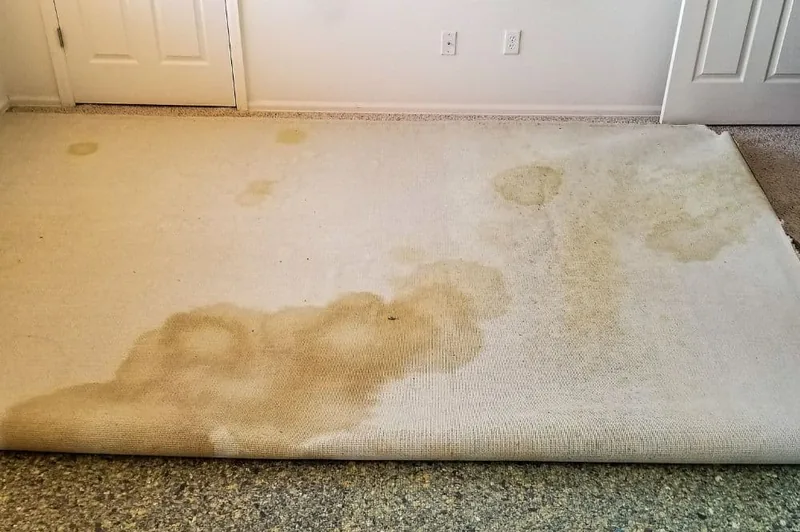
The wrong pad can. Some inexpensive pads use PVC, plastic, or chemical anti-slip coatings that react with hardwood floor finishes over time and leave a haze, discoloration, or a sticky residue. Adhesive-backed pads are worse and should never go on a finished floor. A quality felt-and-natural-rubber pad will not do this. Because floor finishes vary, the safest approach is a pad made from floor-safe materials and matched to your floor type, which is what a custom pad gives you.
How do you choose the right rug pad?
Start with the floor and the rug. Note whether the floor is hard or carpet, and whether the rug is thin and slippery or thick and heavy, then pick a pad that adds what the rug lacks: grip for a sliding rug, cushion for a thin one. Size the pad slightly smaller than the rug, choose floor-safe materials, and match the thickness to the room and any doors. If that sounds like a lot to get right, a custom pad takes the guesswork out. Fiber Specialties makes custom-cut rug pads sized to your rug and matched to your floor, and we wash the pad free when it is paired with a rug cleaning.
How thick should a rug pad be?
Thickness is a balance. A thicker felt pad, around a quarter to three-eighths of an inch, feels plush underfoot and cushions a rug best in a living room or bedroom. A thinner pad, an eighth of an inch or less, is better under a rug that sits in a doorway or under furniture that has to stay level, and under low-pile rugs where a thick pad would make the rug feel unstable. Match the thickness to the room and to how the doors and furniture around the rug sit, and when the rug spans a walkway, lean thinner so no one catches a toe on the edge.
How long does a rug pad last?
A quality felt-and-rubber pad lasts many years, often outlasting several cleanings of the rug on top of it. Cheaper foam and PVC pads break down faster: they crumble, go hard, or start to stick to the floor, and that is when they can damage a finish. If a pad has flattened, crumbled, or left marks on the floor, replace it. When we clean a rug, we check the pad too and can make a fresh custom-cut pad matched to the rug and floor.
The bottom line: a good rug pad is a small cost that protects a much larger one. Match it to your floor and rug, choose floor-safe felt-and-rubber materials, and size it slightly smaller than the rug on every side, and it will keep the rug in place, save your floor, and add years to the life of the rug on top of it.
Rug pad questions
Do I really need a rug pad?
For most rugs, yes. A rug pad protects the rug from wear, keeps it from slipping, cushions your step, and protects the floor underneath. It is the single cheapest thing you can do to make a rug last longer, especially on hard floors where a rug slides and grinds without one.
What does a rug pad do?
A good pad does four things: it grips so the rug does not slide, it cushions so foot traffic wears the pad instead of the rug, it protects hard floors from scratches and color transfer, and it lets air move under the rug. Together those add years to a rug and make it safer to walk on.
What kind of rug pad is best for hard floors?
On hardwood, tile, or laminate, a felt-and-rubber pad is usually best: the felt cushions and the natural rubber grips without sliding. Avoid cheap PVC or adhesive-backed pads, which can discolor a floor or leave residue over time. The right pad depends on the rug and floor, so we help you match it.
Can a rug pad damage my floor?
The wrong pad can. Some inexpensive pads use PVC or chemical coatings that react with floor finishes and leave a haze or sticky residue, especially on hardwood. A quality felt-and-natural-rubber pad will not. When we make a custom pad, we match it to your floor type.
Do you sell rug pads?
Yes. Fiber Specialties makes custom-cut rug pads sized to your rug and matched to your floor, and we wash the pad free when it is paired with a rug cleaning. See our custom rug pads page or call (208) 272-9705.
Sources
Standards referenced in this guide: Carpet and Rug Institute (CRI) · Association of Rug Care Specialists (ARCS).
Written by the Certified Master Rug Cleaners at Fiber Specialties, Boise, Idaho. Last updated July 2026.
Want a pad cut to fit your rug?
Free pickup & delivery across the Treasure Valley. Certified Master Rug Cleaners.
Sources & industry standards
- IICRC, the Institute of Inspection, Cleaning and Restoration Certification: the industry body whose S100/S310 standards govern professional rug and carpet cleaning.
- The WoolSafe Organisation: independent certification for wool-safe cleaning products and methods.
- The Carpet and Rug Institute (CRI): the science-based trade authority for carpet and rug care.
- U.S. EPA, Carpets & Indoor Air Quality: guidance on how clean carpets and rugs support healthy indoor air.